
 Reviewed by
We’ve seen an emergence of new technologies and shifting customer behaviors in recent years, creating current ecommerce trends that are now reshaping the industry. Still, there’s no better time to jump into the ecommerce space, with global sales forecasts expecting to hit $6.4 trillion in 2026!
To capitalize on this opportunity, you’ll need to understand these evolving trends and adapt your strategy accordingly.
No worries, we’re here to help out! In this guide, we’ll walk you through some of the most relevant ecommerce marketing trends and offer actionable steps to help your store stay ahead.
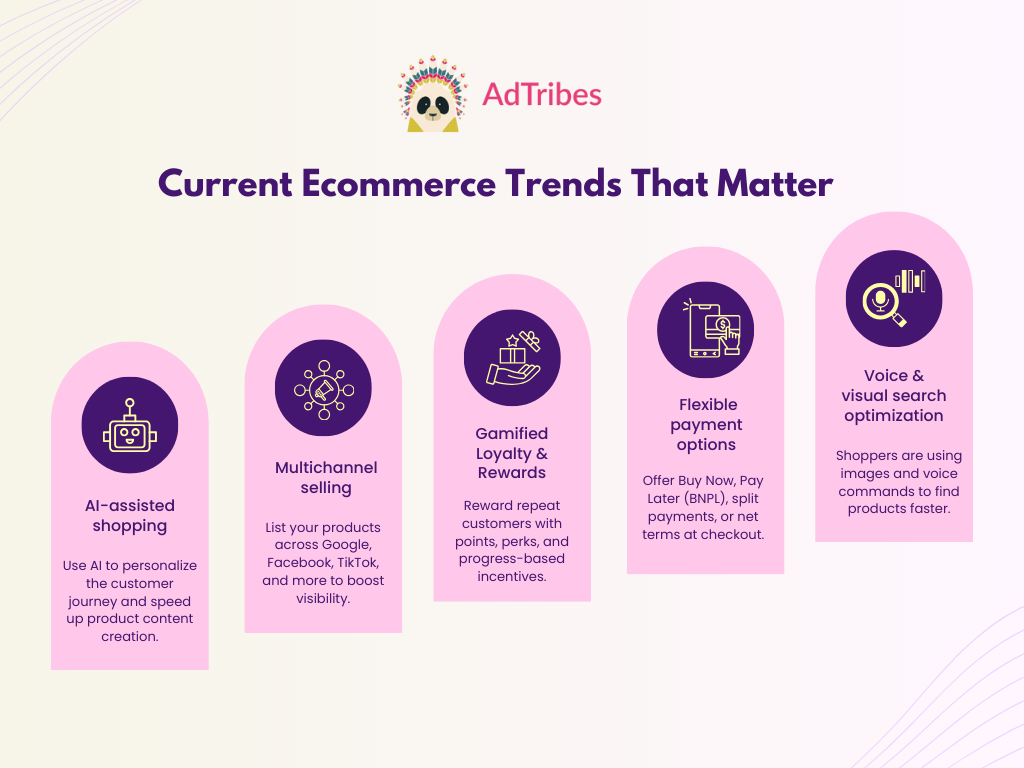
Here’s a quick summary if you’re short on time:
- AI-assisted shopping
- Multichannel selling
- Loyalty programs and gamified rewards
- Flexible payment options
- Voice and visual search optimization
What Are Ecommerce Trends?
Ecommerce trends encompass shifts in technologies, customer behavior, buyer expectations, and marketing strategies that directly impact how people shop online. Most trends emerge due to new technologies like AI, automation, or flexible payment options. Others are driven by changing customer preferences, such as the demand for personalization or sustainability.
Understanding current ecommerce trends can help you stay competitive, make smarter decisions, and improve the overall customer experience as your business grows.
Current Ecommerce Trends That Matter In 2026
To help your business stay ahead, we’ve compiled a list of ecommerce marketing trends worth looking into. Under each, we’ve also added actionable steps to help you turn these insights into results. Let’s get started!
1. AI-assisted shopping
Artificial intelligence (AI) is increasingly being used to deliver faster and more efficient shopping experiences both for customers and store owners. In 2026, more stores will take advantage of this technology to streamline their operations and personalize the shopping journey. Understanding how to use AI agents effectively can help businesses optimize these tools for specific workflows and improve overall efficiency.
On the customer side, AI shopping assistants are helping shoppers make better purchase decisions and access support instantly. According to industry estimates, 88% of shoppers are now making purchase decisions using AI-powered product recommendations.
For store owners, AI is boosting efficiency. It speeds up product content creation by quickly generating SEO-optimized product content, which saves time and maintains consistency for large catalogs. AI chatbots are also playing a key role in customer support, helping answer common queries even outside business hours.
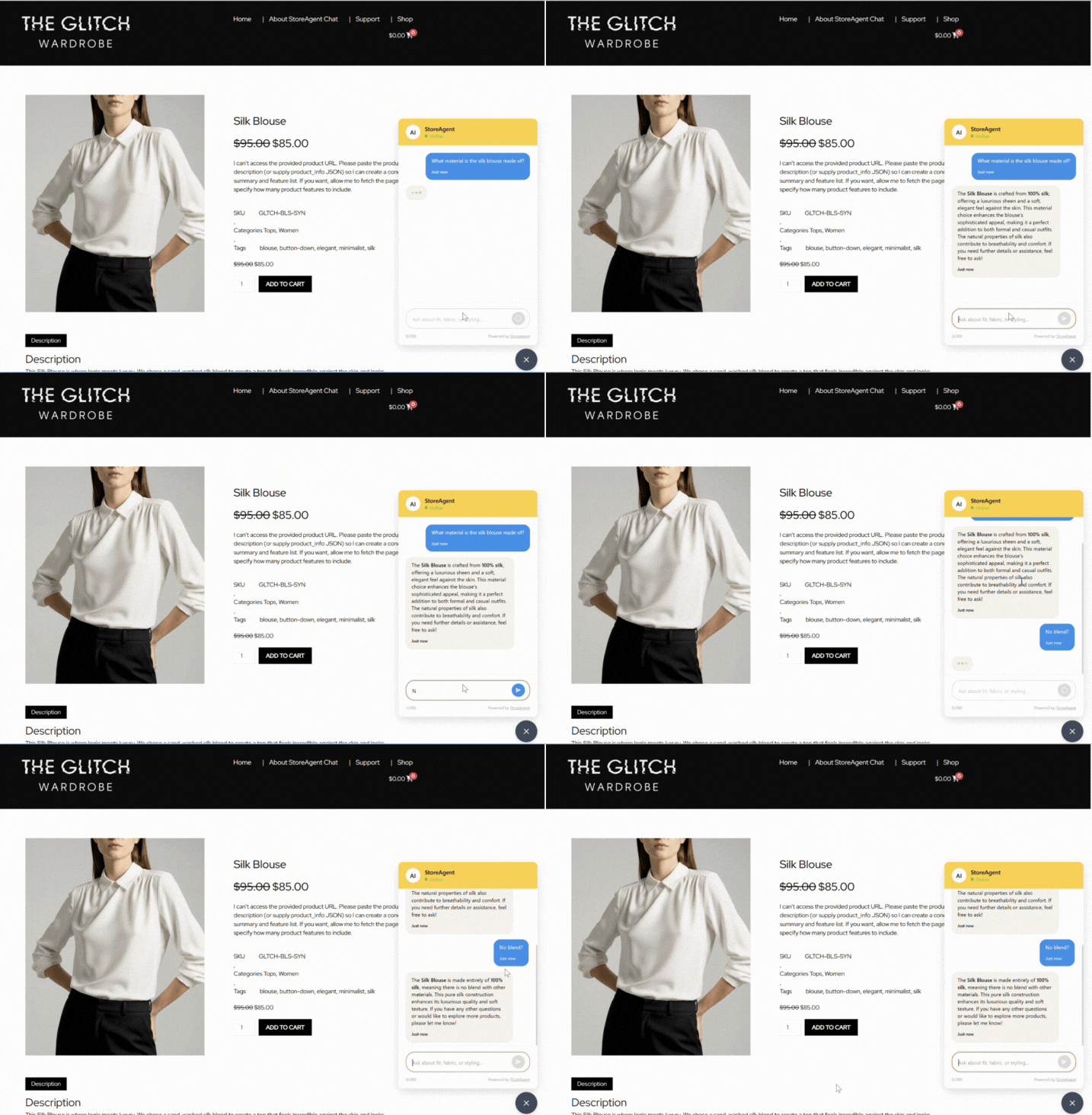
Thankfully, new tools are making AI integration more accessible for store owners. Plugins like StoreAgent, for example, allow WooCommerce stores to craft compelling SEO-optimized product copy and launch an AI chatbot that assists shoppers in real time without the complicated setup.
How to adapt
- Personalize your store’s experience with tools like StoreAgent Chat, a WooCommerce chatbot, which can recommend products, answer questions, and guide users.
- Speed up content creation using tools like StoreAgent Content, a product description generator, which generates compelling, SEO-friendly product descriptions in seconds based on your product data.
- Start small! You don’t need to overhaul your entire workflow to keep up with AI. You can try implementing it in one aspect first (such as support), then scale from there.
🎯 Power Tip: To stay organized as you scale, you can connect AI tools with your project management integration system to keep track of tasks and coordinate teams more effectively.
2. Multichannel selling
Modern shoppers use different channels to discover, compare, and buy products. According to industry insights, 33% of customers use more than three commerce channels to research and browse products. To make sure you’re appearing where your customers shop, it’s important to embrace multichannel selling.
Multichannel selling entails listing your products across multiple platforms: your website, Google Shopping, Facebook, Instagram, and even marketplaces and comparison shopping websites. This enhances your store’s visibility and creates more touchpoints to meet customers where they’re looking.
You can use product feeds to simplify this process. A product feed is a file that automatically shares your product data (like titles, price, stock) with external platforms. Plugins like AdTribes help you create and manage these product feeds for over 100+ marketing channels, including Google Shopping, TikTok, and more.
How to adapt
- Start by identifying the best channels for your products. For most, this means starting with Google Shopping or Meta platforms, then expanding to other social media platforms like TikTok, Pinterest, or marketplaces based on where your audience is most active.
- Use a product feed plugin like AdTribes to manage all your feeds from one place, ensuring they meet each channel’s requirements without manual rework.
- Test and optimize! Monitor each channel’s performance regularly and optimize based on which ones are delivering the best traffic and sales.
3. Loyalty programs and gamified rewards
Loyalty systems and gamified rewards are some of the most impactful ecommerce marketing trends because they focus on customer retention. On average, existing customers spend 31% more and are 50% more likely to try new products compared to new buyers. One of the ways to keep them engaged is by rewarding their interactions with your brand.

Gamified rewards introduce fun, game-like elements to the customer journey. Think missions, reward tiers, referral bonuses, and milestone rewards. These mechanics tap into motivation and progress, making customers feel recognized for engaging with your business.
You can easily set these up in WooCommerce using tools like Advanced Coupons. With this plugin, you can launch a points-based loyalty program, offer discounts based on order history, and trigger automated coupons for specific actions, such as reaching a minimum order amount or buying from specific product categories.
These perks encourage customers to come back again and again, giving you an edge in a competitive market.
How to adapt
- Launch a loyalty program and offer points for basic actions like purchases, sign-ups, or reviews. This gives you quick wins without overcomplicating your rewards system.
- Make rewards feel valuable and attainable. Offer both small instant perks (like free shipping) and long-term rewards (like exclusive discounts or store credit). You can easily set these rewards up using tools like Advanced Coupons.
- Promote your program visibly across your site: on product pages, carts, post-purchase emails, and banners. Let customers know they’re being rewarded from the very first interaction.
4. Offering flexible payment options
Today’s shoppers expect more convenience, control, and flexibility over how they pay. In fact, according to an industry report, 70% of customers consider the availability of their preferred payment method to be very or extremely influential when selecting an online store. Offering flexible payment terms can help improve the customer experience and reduce abandoned carts.
If your store caters to wholesale or B2B customers, it’s a must. These customers often operate with budgets or procurement processes that require installment or Buy Now, Pay Later (BNPL) plans. Thankfully, these options are easy to enable with the right tools.
WooCommerce store owners, for instance, can use plugins like Wholesale Payments to easily offer custom payment terms, enable split payments, or offer BNPL options.
How to adapt
- Assess your customers’ needs. Are they wholesale buyers, budget-conscious shoppers, or looking for payment flexibility on larger orders?
- Enable flexible payment options using a plugin like Wholesale Payments. You can offer Net 15/30 terms, BNPL, or split payments based on customer roles.
- Make these options visible. Highlight available options on product pages, checkout, and in your marketing emails to reduce hesitation and build trust.
5. Voice and visual search optimization
Thanks to new technologies and tools like Google Lens, more and more shoppers are using voice and visual search to find what they’re looking for. This shift is why voice and visual search optimization is becoming one of the most important current ecommerce trends.
Customers nowadays use AI tools like Siri and Alexa for voice search—it’s quick and perfect for hands-free browsing. Visual search, on the other hand, is where shoppers use images instead of text to find products. It’s transforming how product discovery works, and is challenging store owners to optimize their product listings to appear in both voice and image-based results.
The key to doing so is optimizing your store’s product data. Listings with clear titles, well-written descriptions, and high-quality images improve your chances of being seen on voice or visual-based discovery.
How to adapt
- Use natural language in your product titles and descriptions. Think about how people speak when searching, not just how they type.
- It’s also important to optimize images for visual search. Include multiple, high-quality product photos and use descriptive, keyword-rich image alt text.
- Structure your site for searchability. Clean URLs, clear categories, and schema markup all help search engines (and voice tools) better understand your content. Using a well-organized blog post template can also make it easier to create consistent, SEO-friendly content that ranks higher.
Frequently Asked Questions
What are the latest trends in marketing?
Some of the latest ecommerce marketing trends include AI-assisted shopping and personalization, multichannel selling, gamified rewards and loyalty, and mobile-first shopping. These strategies aim to meet modern buyer expectations, reduce friction in the customer journey, and improve customer retention.
Which niche has high demand?
High-demand niches in 2026 include AI-powered products, remote work tools, digital learning, health and wellness, eco-friendly products, and specialized e-commerce. As customers become more value-driven and convenience-focused, they’re gravitating toward brands that meet specific needs or offer unique, tailored experiences.
How often should I update my ecommerce strategy?
Reviewing your strategy at least every quarter is ideal, as new technologies and tools continue to emerge. It’s also a great opportunity to assess what’s working, especially if you’ve implemented a new discount strategy or multichannel campaign. These reviews help you stay aligned with industry trends and shifting customer behaviors.
Wrapping Up
Keeping up with current ecommerce trends can set your store up for success, even as the market continues to evolve. In this guide, we’ve covered some of the most impactful trends you should look out for in 2026 and beyond. Here’s a quick recap:
- AI-assisted shopping
- Multichannel selling
- Loyalty programs and gamified rewards
- Flexible payment options
- Voice and visual search optimization
We’ve also walked you through tools to help you put these trends into action, including AdTribes. This powerful WooCommerce plugin simplifies multichannel selling by helping you create and manage optimized product feeds for 100+ sales channels. This makes it easier to stay competitive and visible, even in a fast-growing industry.
Do you have any questions about this topic? Let us know in the comments.