
You’ve run your feed and it contains far fewer products than your store has — or it’s completely empty. In most cases, a setting in your feed configuration is filtering products out without you realising it.
This guide covers the most common causes. Work through each one that applies to your setup until your product count is correct.
Common causes
- “Include product variations” is disabled
- “And only include default product variation” is enabled
- “And only include lowest priced product variation(s)” is enabled
- Both “And only include default product variation” and “And only include lowest priced product variation(s)” are enabled
- “Create a preview of the feed” is enabled
- The
item_group_idattribute is removed from Field Mapping - Incorrect filter configuration
- A caching plugin is serving an old version of the feed
- Products excluded by total sales or date range filters
- Feed statistics show zero products for JSONL or gzip format feeds (Elite)
Troubleshooting
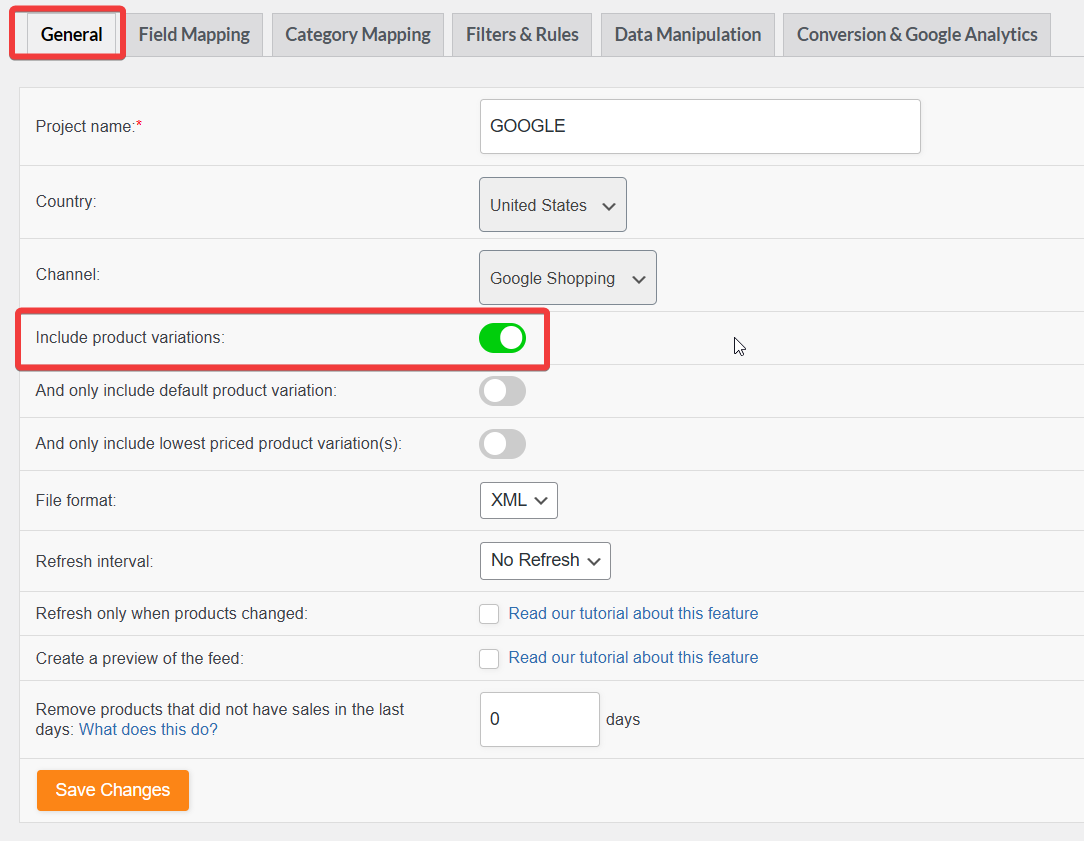
> Note: When this option is disabled, the feed includes simple products only. All variations are excluded.
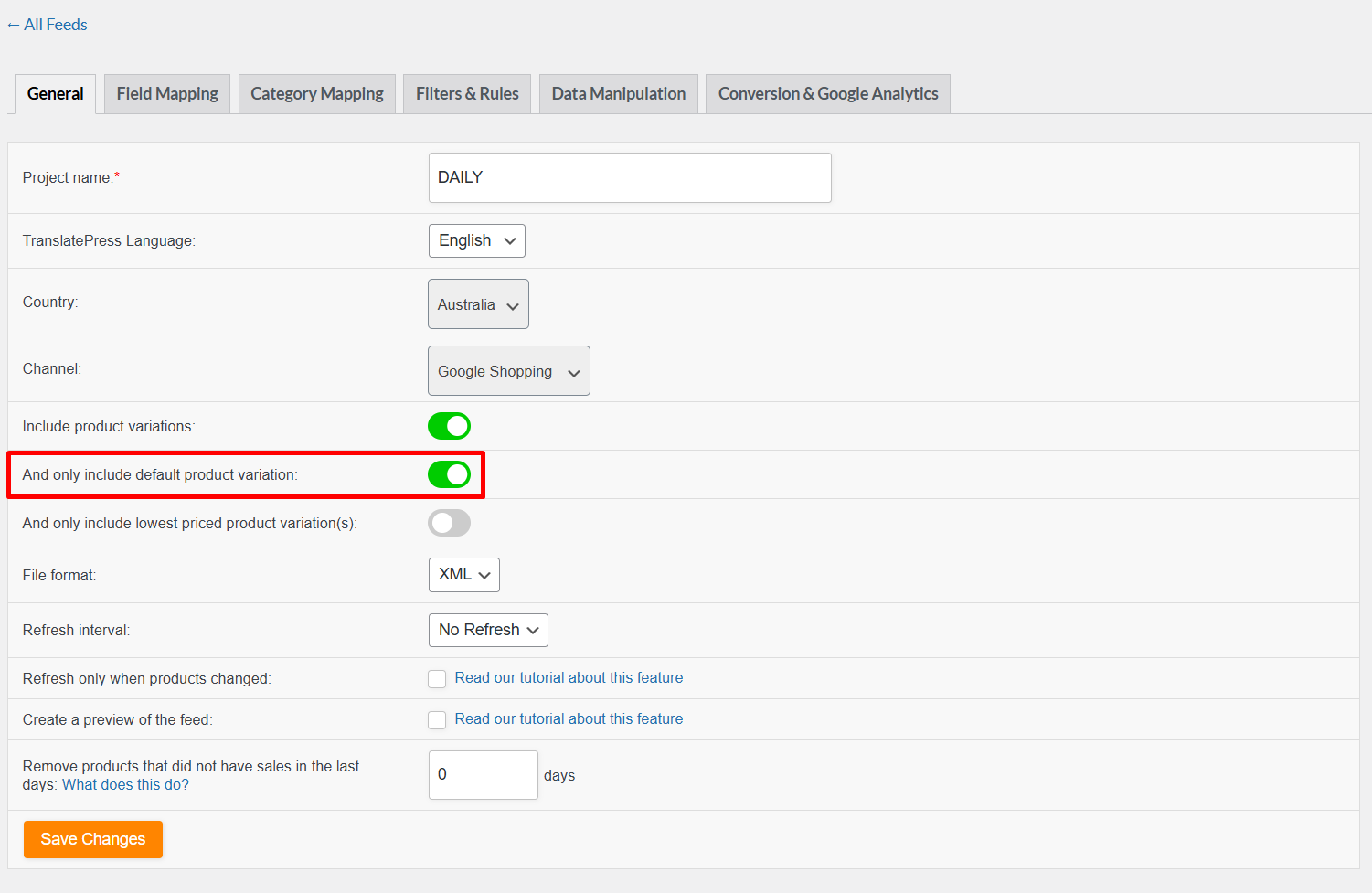
> Note: If none of your variable products have a default variation set, every variable product is excluded. If your store has only variable products, the feed will be empty.
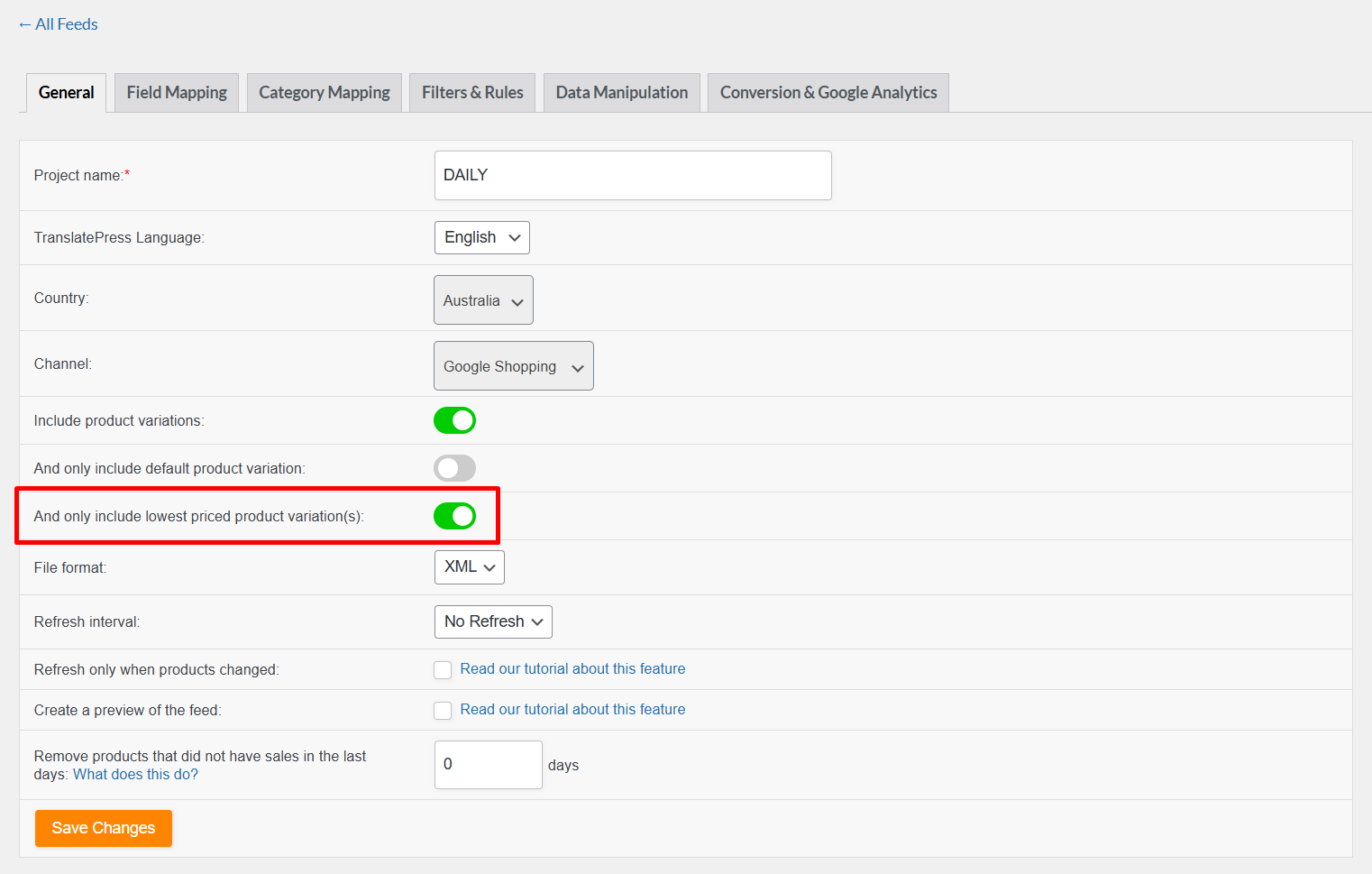
If multiple variations share the same lowest price, all of them are included. If all variations have the same price, all variations are included.
> Note: This can cause inconsistent product counts depending on how your variation prices are structured.
- It identifies the default variation for each variable product.
- It checks whether that default variation is also the lowest-priced variation.
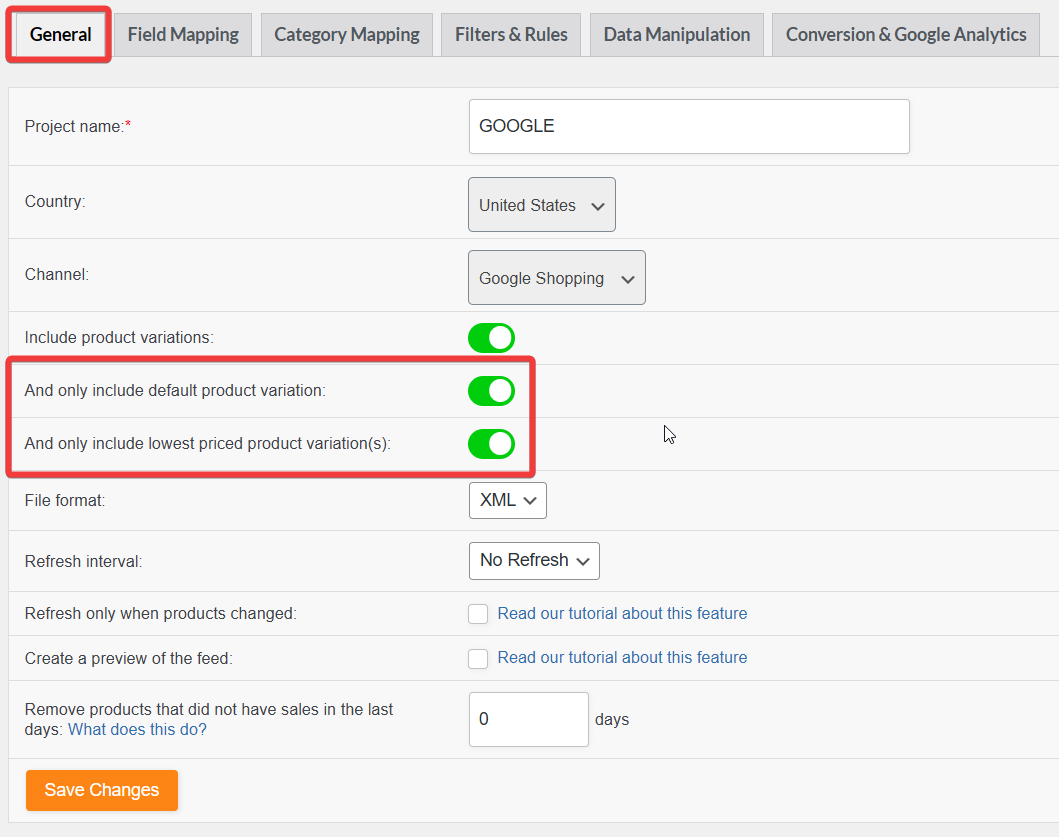
A product is included only when both conditions are true. If either fails, the entire variable product is excluded.
> Note: If none of your variable products have a default variation set, the feed will be empty.
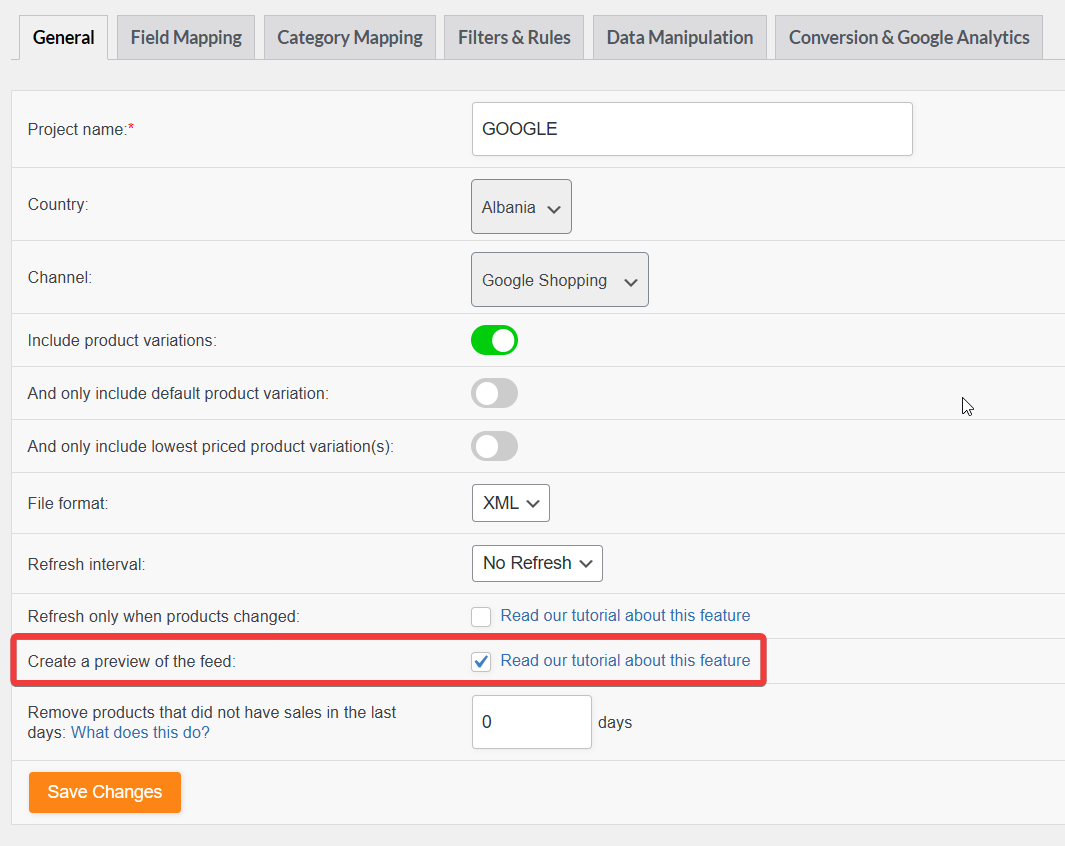
This option is for testing only. If it’s accidentally left on, the feed will look incomplete even though your store has many more products.
> Note: To generate a full feed, make sure Create a preview of the feed is disabled.
item_group_id field. This field tells platforms like Google Shopping and Facebook which variations belong to the same parent product, so they can group them correctly.
> Important: If you remove the
item_group_id mapping from the Field Mapping tab, the plugin can’t identify parent–child relationships between variations. Your feed may appear incomplete or incorrectly structured on the channel.When generating feeds for Google Shopping or Facebook, always keep the default
item_group_id mapping enabled.One common issue is using the
include_only filter more than once in the same feed. For example, if you want to include both Clothing and T-shirts, you might add two separate include_only filters:
This doesn’t work. The
include_only filter can only be used once per feed. When applied twice, the conditions conflict and products that don’t match both simultaneously are excluded.Recommended fix: Create two separate feeds, each with a single
include_only category filter.For detailed instructions, see How to create filters for your product feed.
To fix this:
- Clear or purge the cache in your caching plugin and your browser after updating the feed.
- If the issue continues, temporarily disable the caching plugin to confirm it’s the cause.
- To avoid clearing the cache repeatedly, exclude your feed folder from being cached. Add this URL pattern to your caching plugin’s exclusion list:
yourdomain.com/wp-content/uploads/woo-product-feed-pro/** wildcard covers all feed files under that folder.For example, if you’ve set a minimum of two total sales and most of your products have fewer, those products won’t appear.
For detailed instructions on how these filters work, see Create a Feed With Performing Products Only.
Earlier versions of the plugin had a bug where the statistics counter didn’t support JSONL, JSONL.GZ, or CSV.GZ formats. Feeds in those formats recorded a count of zero in the statistics view even though the feed file on disk was correct and complete.
> Note: This is a statistics display issue only — it doesn’t affect the actual products in your feed. The feed file is correct. Update the plugin to the latest version to resolve the statistics display.
This issue is most common with OpenAI Product Feed feeds, which use the JSONL.GZ or CSV.GZ format by default.

Need more help?
If you’ve worked through all of the above and products are still missing, reach out with your Feed URL and the plugin Feed System Log.
You can find the system log under Product Feed → Settings → System check. Click Copy to clipboard to copy the details, then share them in your support request.
If you’re a Product Feed Elite user, open a support ticket.
If you’re using the free version of Product Feed Pro, create a new topic on the WordPress.org forum.