

 Reviewed by
At a glance, AdTribes vs CTX Feed can feel like a close match. Both support a wide range of channels, both offer free versions, and both are established WooCommerce product feed plugins with strong user bases.
But once you look past that, the differences become a lot more important. Things like feed controls, validation tools, pricing structure, upgrade path, and overall workflow can make one plugin a much better fit depending on how your store operates.
That’s what this comparison is here to cover. In this article, we’ll break down the key differences between AdTribes and CTX Feed, including features, pricing, strengths, limitations, and overall fit for different types of WooCommerce stores.
Let’s get right into it!
AdTribes vs CTX Feed: Quick Comparison
For anyone who wants the summary upfront:
| AdTribes | CTX Feed | |
|---|---|---|
| Free plan | ✓ | ✓ |
| Paid from | $99.50/yr | $119/yr |
| Channel templates | 100+ templates | 220+ templates |
| Rules and filters | ✓ Advanced rules & filters | ✓ Dynamic attributes & filters |
| Feed Validator | ✓ (Plus/Business) | ✗ |
| OpenAI product feed | ✓ | ✗ |
| Price adjustments | ✓ | ✓ |
| Multilingual / multi-currency support | ✓ | ✓ |
| Multi-vendor support | ✗ | ✓ |
| Lifetime license | ✗ | ✓ ($300 single site) |
| Money-back guarantee | 14 days | 30 days |
| Active installs | 80,000+ | 70,000+ |
| Rating (WordPress.org) | 4.7★ | 4.6★ |
Now let’s get into what those differences actually mean for your store.
Where AdTribes Wins
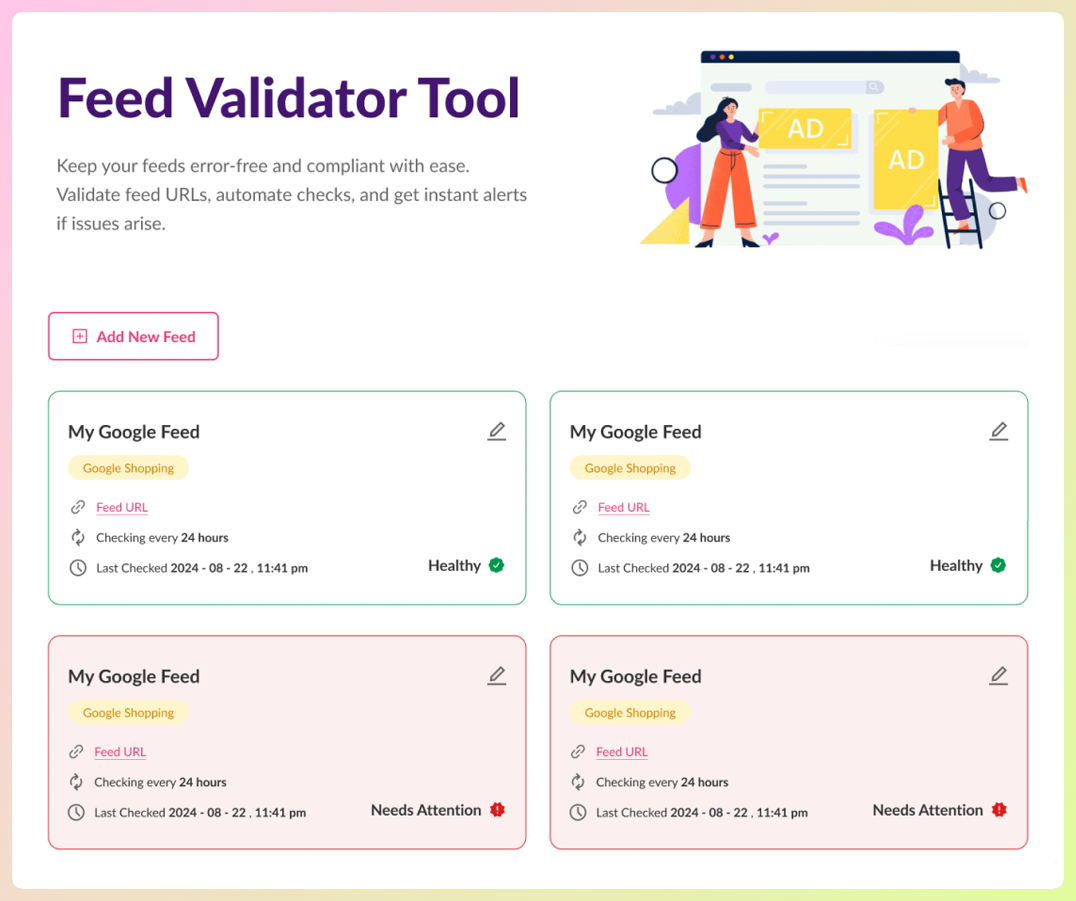
Feed Validator: a feature CTX Feed doesn’t have
The Feed Validator is one of the clearest reasons AdTribes stands out in this comparison, especially for stores that rely heavily on Google Shopping and other feed-driven channels.
The Feed Validator helps you check feed URLs for issues before they turn into bigger listing problems. It adds an extra layer of feed checking for stores that want to spot problems earlier and keep their feeds in better shape.
Instead of finding out about feed issues only after submission, you can check your feed earlier, spot common problems, and clean things up before they turn into bigger listing issues.
This feature is available on AdTribes Plus and Business, so it’s more relevant if you’re comparing the paid versions of both plugins rather than just the entry-level plans.
AdTribes has a stronger edge here for merchants who want an extra layer of feed checking built into their workflow.
Advanced rules engine
Both plugins have a rules/conditions engine. The difference is depth.
AdTribes uses an IF/THEN logic system where you can set conditions based on any product attribute and trigger actions on any feed field. Common use cases:
- Prepend brand name to every product title (e.g., “Nike Air Max 90” instead of “Air Max 90”)
- Append size/color to titles for variable products
- Replace short descriptions with long descriptions when the short description is under 50 characters
- Set a custom label based on product margin or sale status
- Exclude products with a specific tag from specific channels
CTX Feed also gives you rule-based feed customization, so this isn’t a case of one plugin having rules and the other not.
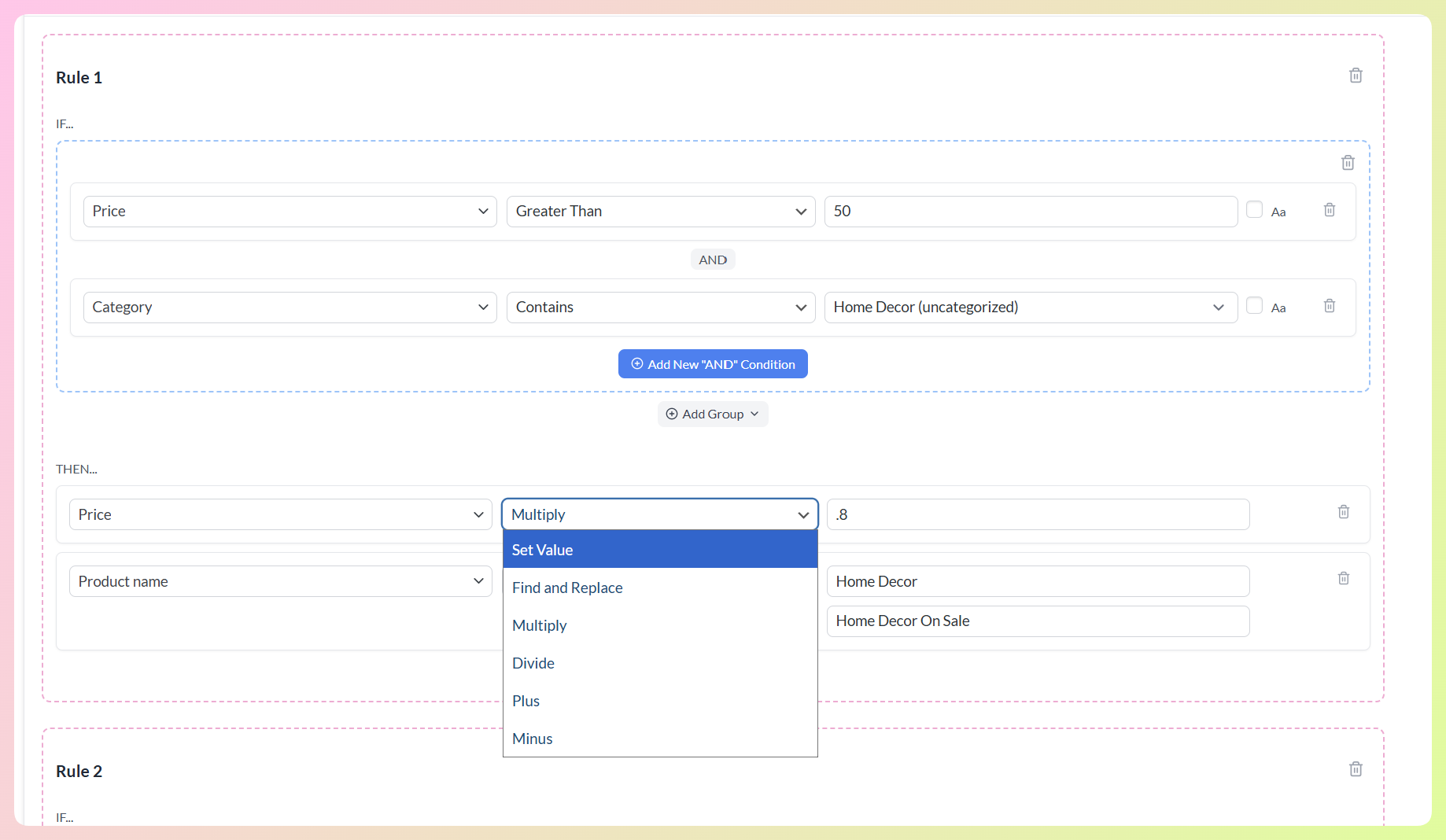
The bigger difference is how those rules fit into the overall workflow. AdTribes feels like the stronger long-term choice for stores that expect their feed setup to become more advanced over time, thanks to its broader WooCommerce-focused toolkit, added feed controls, and higher-tier features like Feed Validator.
OpenAI product feed
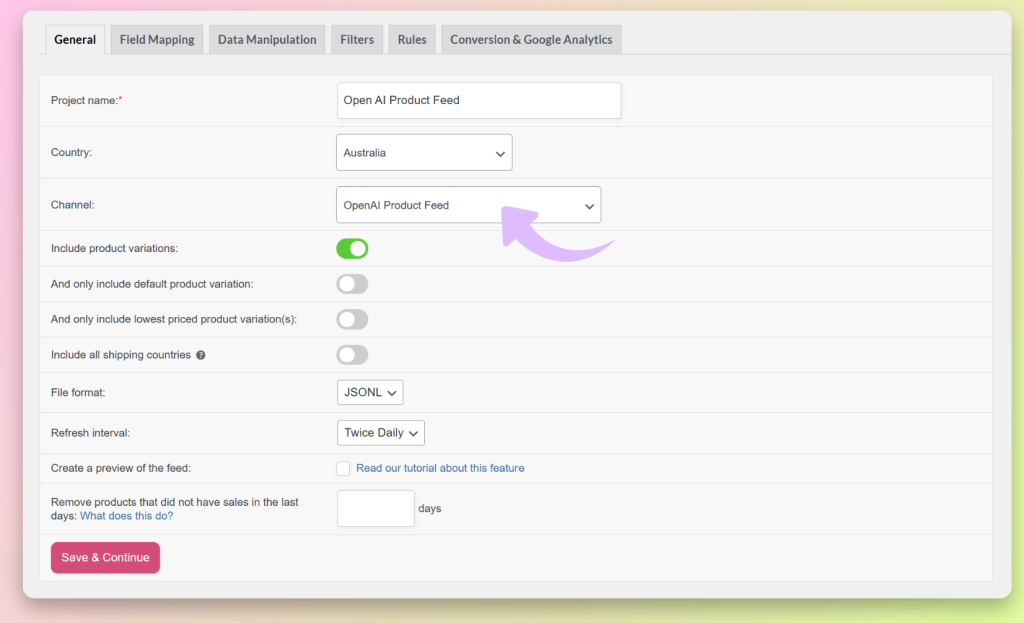
AdTribes has a unique feature that CTX Feed doesn’t offer: an OpenAI product feed that helps your products surface in ChatGPT and AI-powered product discovery tools. As AI shopping assistants become more common entry points for product discovery, this positions AdTribes stores for a channel CTX Feed users won’t have access to.
Pricing: AdTribes is cheaper for a single site
AdTribes Elite Growth (single site) costs $99.50/year. CTX Feed Pro (single site) costs $119/year. That’s a $19.50/year difference — not dramatic, but AdTribes is the better value at entry level, especially given the additional features.
For multi-site, AdTribes charges $179.50/yr for 3 sites and $249.50/yr for unlimited. CTX Feed charges $199/yr for five sites and $229/yr for ten. If you’re an agency with many sites, compare both pricing pages carefully for your specific use case.
Integrations
AdTribes has 20+ official integrations in the Plus/Business plans — including WPML, Polylang, TranslatePress, Aelia Currency Switcher, Curcy, and others. These are tested and maintained integrations, not theoretical compatibility. For international stores running multi-language or multi-currency setups, this matters significantly.
As your setup gets more complex, AdTribes also gives you a smoother upgrade path. Higher plans add features like Feed Validator and broader integration support, which makes the plugin a better long-term fit for stores that need more control over their feeds.
CTX Feed also supports multilingual, multi-currency, and multi-vendor setups on Pro, so this isn’t a case of one plugin supporting these workflows and the other not. The bigger difference is that AdTribes feels more complete for stores that want a feed setup they can grow into over time.
Where CTX Feed Wins
Lifetime license
CTX Feed offers lifetime licenses starting at $300 for a single site. AdTribes has no lifetime option — all plans are annual. If you want to pay once and never think about renewal, CTX Feed is the only option of the two.
Whether this is a good deal depends on how long you plan to use the plugin and how much you value ongoing updates. At $119/year, CTX Feed’s annual plan breaks even with the $300 lifetime license in about 2.5 years. After that, the lifetime plan saves money — but only if the plugin continues to meet your needs.
30-day money-back guarantee
CTX Feed offers a 30-day money-back guarantee. AdTribes offers 14 days. Not a major differentiator, but worth noting if you want more time to evaluate.
Multi-vendor support
CTX Feed supports multi-vendor WooCommerce setups — marketplaces built with plugins like Dokan or WCFM. You can create feeds filtered by specific vendor, which is valuable if you’re running a marketplace rather than a single-brand store. AdTribes does not have native multi-vendor feed filtering.
Channel template count
CTX Feed publicly highlights broader template coverage, with 220+ pre-built templates across shopping, social, and marketplace channels. AdTribes covers 100+ templates and still includes all the major channels most WooCommerce stores care about.
For many store owners, that means the real difference is less about mainstream channel coverage and more about whether you need support for more niche or regional channels.
Feature-by-Feature Breakdown
Feed creation and templates
Both plugins use pre-configured templates that map your WooCommerce product fields to the required fields for each channel. The template quality is comparable for major channels — Google Shopping, Meta, TikTok, Pinterest, and the main CSEs all work reliably in both.
Where AdTribes has a specific advantage: the template setup process and the way it surfaces required vs. optional fields is slightly more transparent. You’re less likely to submit a Google feed missing a required attribute without realizing it.
The templates give you a solid starting point, and the higher plans add tools like extra product data fields, custom refresh control, and Feed Validator. That makes AdTribes a more practical long-term choice for stores that expect their feed setup to become more advanced over time.
Variable product handling
Variable products (products with size, color, and other variant attributes) are one of the most common pain points in WooCommerce feed management. Both plugins handle variable products, but the configuration options differ.
Both plugins support variable products, which is important for stores selling items with different sizes, colors, or other variation-heavy setups.
AdTribes is also a practical choice for WooCommerce stores that want reliable variable product feed handling without making the setup feel overly technical.
For stores with complex variation structures, test both on your specific product catalog before committing.
Support quality
Both plugins have established WordPress.org listings, public reviews, and documentation, so neither feels like an unknown option.
AdTribes also offers priority email support on the Elite Business plan, which adds value for stores that want more responsive help as their setup becomes more advanced.
Documentation and onboarding
AdTribes has a comprehensive knowledge base covering feed setup, rules configuration, channel-specific requirements, and troubleshooting. CTX Feed also has documentation, though its knowledge base is less extensively indexed.
For beginners, both plugins have a learning curve beyond the initial feed setup. AdTribes’ documentation tends to cover the “why” alongside the “how” — particularly useful when you’re trying to understand what Google actually needs versus what the plugin is offering.
Pricing Comparison
Here’s the full pricing breakdown for both plugins:
AdTribes
| Plan | Price | Sites |
|---|---|---|
| Free | $0 | 1 |
| Elite Growth | $99.50/yr | 1 |
| Elite Plus | $179.50/yr | 3 |
| Elite Business | $249.50/yr | Unlimited |
14-day money-back guarantee. No lifetime option.
CTX Feed
| Plan | Annual Price | Lifetime Price | Sites |
|---|---|---|---|
| Free | $0 | — | 1 |
| Single Site Pro | $119/yr | $300 | 1 |
| Five Site Pro | $199/yr | $440 | 5 |
| Ten Site Pro | $229/yr | $640 | 10 |
30-day money-back guarantee. Lifetime licenses available.
Bottom line on pricing: AdTribes is cheaper for a single store, and its unlimited-site Business plan is especially attractive for agencies or freelancers managing many WooCommerce stores.
CTX Feed is still worth a look if you specifically want a 5-site tier or a lifetime license. But for stores comparing long-term value at the single-site level or looking for an affordable unlimited-site option, AdTribes comes out stronger.
Which Should You Choose?
Choose AdTribes if:
- You want Feed Validator on higher plans to catch feed issues earlier and keep Google Shopping feeds in better shape
- You want a stronger long-term workflow around rules, feed controls, and advanced feed management
- You want strong value at the single-site level or an affordable unlimited-site option
- You’re interested in AI-powered product discovery via the OpenAI product feed
- You sell internationally and want a stronger upgrade path for multilingual and multi-currency feed setups
Choose CTX Feed if:
- You want a lifetime license and prefer paying once over annual renewals
- You’re running a multi-vendor WooCommerce marketplace (Dokan, WCFM)
- You need a slightly longer evaluation period (30-day vs 14-day guarantee)
- You want very frequent free feed updates without upgrading to a paid plan
- You’ve specifically found a channel template in CTX Feed that AdTribes doesn’t cover
For many WooCommerce store owners, AdTribes is the stronger overall choice because it combines a solid free starting point with a more complete long-term workflow as your feed needs grow.
It stands out even more for stores selling on Google Shopping and expanding across multiple channels, especially if you want stronger feed controls, flexible upgrade options, and room to scale without switching tools too soon.
AdTribes and CTX Feed aren’t the only options — for a wider comparison covering RexTheme, WebToffee, and DataFeedWatch alongside both, see our best WooCommerce product feed plugins ranking.
Frequently Asked Questions
Can I switch from CTX Feed to AdTribes without losing my feeds?
Your WooCommerce product data stays intact — it lives in your store, not in the plugin. What you’ll need to rebuild are the feed configurations: channel connections, field mappings, and rules. For stores with only a small number of active feeds, the migration is usually manageable, but the exact time depends on how many channels, field mappings, and custom rules you need to recreate. Running both plugins simultaneously during the transition is the safest approach — build your AdTribes feeds, verify them, then deactivate CTX Feed.
Does AdTribes or CTX Feed work better for Google Shopping?
Both plugins support Google Shopping and can handle the required product data fields for getting products into the channel.
AdTribes has a stronger edge for stores that want more control over feed quality and optimization as they grow. Features like Feed Validator on higher plans and flexible feed rules make it a stronger choice for merchants who want to catch issues earlier and fine-tune their feed without constantly editing products by hand.
For stores that take Google Shopping seriously as a growth channel, AdTribes feels like the better long-term fit.
Does AdTribes offer a lifetime license?
No — AdTribes plans are annual subscriptions. If paying once and never renewing is important to you, CTX Feed’s lifetime license ($300 for a single site) is worth considering. That said, annual SaaS pricing ensures you always have access to the latest features and channel templates, which matters in an industry where channel requirements change frequently.
Wrapping Up
Both AdTribes and CTX Feed are capable WooCommerce product feed plugins, and either one can help you get products onto major shopping and social channels.
That said, AdTribes stands out as the stronger overall choice for most WooCommerce stores. It offers a more complete long-term workflow, with stronger feed controls, a built-in Feed Validator on higher plans, useful AI-forward features, and pricing that is especially attractive for single-site stores and unlimited-site setups. CTX Feed still has a few narrower advantages, like lifetime pricing and multi-vendor support, but for most store owners looking for a more flexible and future-ready feed management setup, AdTribes is the better fit.
The easiest way to find out is to try AdTribes free and see how it fits your store, your workflow, and the way you manage product feeds day to day.