
 Reviewed by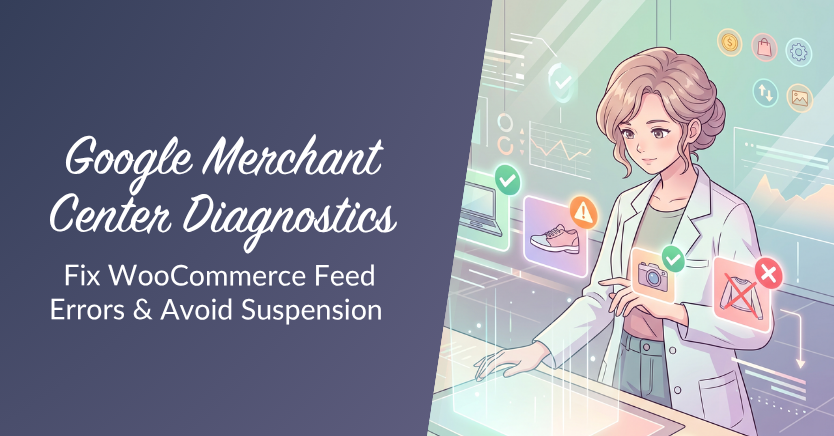
Google Merchant Center diagnostics is the dashboard that tells you which of your WooCommerce products are approved, which have warnings, and which are disapproved or ineligible to show. Once your store is connected and your feed is live, this is where you monitor feed health, clear disapprovals, and catch account-level problems before they affect your product visibility.
Getting connected is only the first step. The real work is keeping your feed healthy after products, prices, stock, images, and Google policies change.
This guide walks through what happens after setup: how to read the diagnostics report, prioritize common product disapprovals, and keep small feed issues from turning into bigger account problems. If you still need to connect your store to Google Shopping, you can start with our WooCommerce Google Shopping setup guide.
How To Read Google Merchant Center Diagnostics
In Merchant Center, product issues are usually surfaced in the Products area, often under Needs attention in the current interface, with related diagnostics and issue details available depending on your account view. These issues are grouped by severity, so understanding the level you are looking at tells you how urgent the fix is. If you’re still not sure why your listings aren’t appearing at all, this guide on products not showing on Google Shopping walks through the most common causes.
- Account issues affect your entire Merchant Center account. These are the most serious because they can limit product visibility across Shopping ads, free listings, or the account as a whole.
- Feed (data source) issues affect a whole feed, usually because of a formatting or fetch problem. These often point to something fixable at the source in your product feed plugin.
- Item issues affect individual products. Google labels each as an error (product is disapproved and will not show), a warning (product shows but performance may suffer), or a notification (informational only).
Work top-down. Resolve account issues first, then feed-level problems, then item-level errors. After that, review warnings and notifications: warnings may not block products immediately, but they can still affect performance or lead to bigger issues later. Notifications are usually suggested improvements, not urgent blockers. When you read the Google Merchant Center diagnostics report this way, a wall of issues turns into a short, prioritized to-do list.
Common Diagnostics Issues And Where To Fix Them
A handful of recurring issues account for most of the errors and disapprovals you will see in the diagnostics report. The goal here is not to fix each one in depth, it is to recognize what diagnostics is telling you so you can triage quickly and clear problems at the source in your WooCommerce feed.
- Missing GTIN or product identifiers: Google expects a GTIN for products it can match to a known catalog entry. Handle it in AdTribes Product Feed Pro by mapping the GTIN field, or set identifier_exists to no for genuinely unbranded or custom-made items.
- Image policy violations: Promotional text, watermarks, broken image URLs, placeholder images, or images that do not meet Google’s requirements can trigger warnings or disapprovals. Swap in a clean product image that meets the spec, then let the feed refresh.
- Price or availability mismatches: When the data in your feed does not match your live product page, Google may disapprove the product for mismatched data. A stale feed, caching issue, sale price change, or stock update can all cause this, so check both your feed refresh schedule and the live product page.
Because many diagnostics issues start with feed data, the fastest approach is to catch problems before Google sees them. If you have access to AdTribes’ Feed Validator, you can check supported feed URLs for issues like missing required fields, invalid image URLs, and format errors before submission.
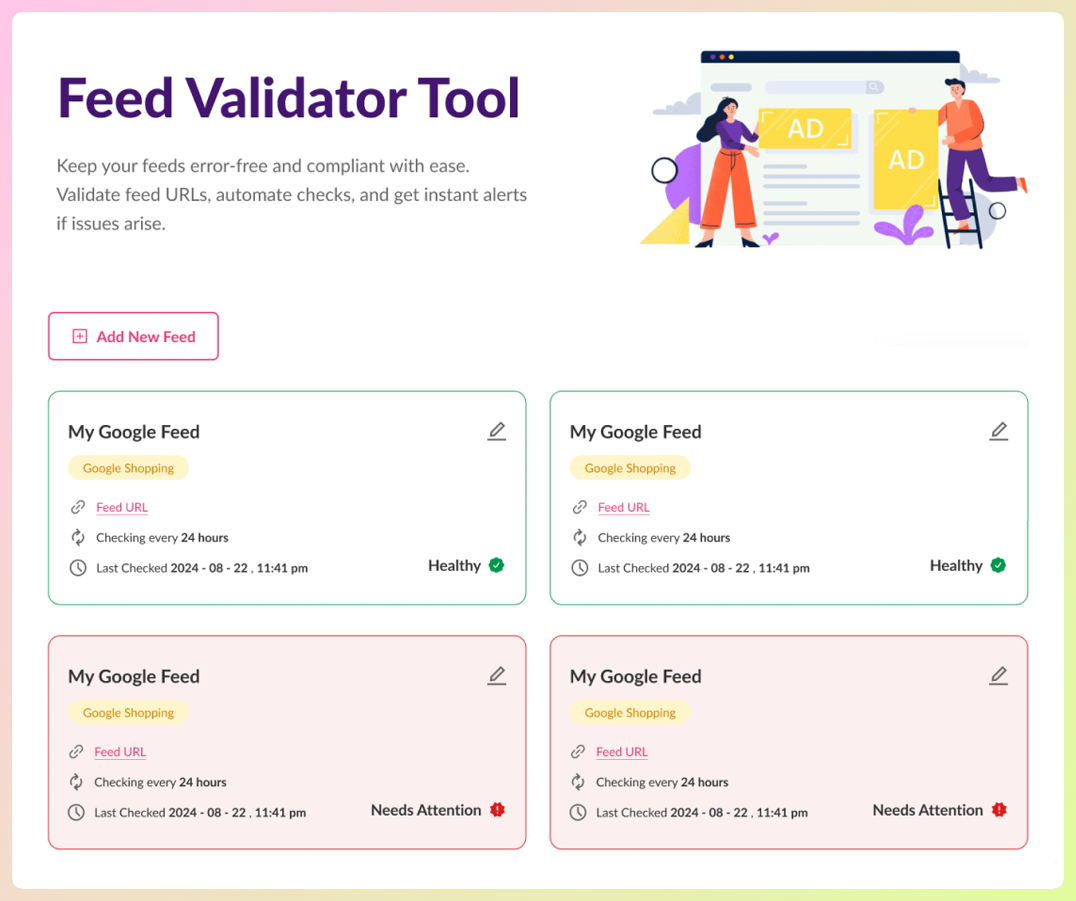
When you need the full, field-by-field fix for a specific error, check out our detailed guides: how to fix Google Shopping feed errors and how to fix disapproved products in Google Merchant Center.
Preventing And Recovering From Account Suspension
An account suspension is the worst-case scenario Google Merchant Center diagnostics can point to: instead of affecting one product, it can make your products ineligible to appear in Shopping ads or free listings until the issue is resolved. Common causes can include misrepresentation, widespread price mismatches or availability mismatches, and missing trust signals like clear contact, refund, and shipping information.
Prevention is mostly housekeeping. Keep accurate refund, shipping, and contact pages live; make sure your feed prices and stock stay synced to your store; and clear item-level errors before they affect product eligibility.
If you are already suspended, our Google Merchant Center suspension recovery guide walks through the reinstatement request step by step. You can also review Google’s own Merchant Center warning and suspension guidance for more context on policy-related account issues, warning periods, and review requests.
A Simple Merchant Center Health Routine
You do not need to live in Merchant Center every day. A short, repeatable routine keeps a WooCommerce catalog healthy without daily firefighting.
- Weekly: open the product issues area in Merchant Center, resolve any new errors and disapprovals, and confirm your approved-product count has not dropped.
- On every catalog change: if you have Feed Validator access, run a check after adding products, changing prices, or running a sale so obvious feed issues are caught earlier.
- Always-on: keep your AdTribes feed refresh schedule and Merchant Center fetch schedule aligned so price and stock data stay current.
- Monthly: spot-check warnings for useful improvements, such as adding valid GTINs, enriching titles, or fixing thin descriptions.
Treat Google Merchant Center diagnostics as an early-warning system rather than a cleanup chore. Check issues weekly, keep your feed data current, and you give your products a better chance of staying approved and visible.
Frequently Asked Questions
How long does it take for fixes to clear in Merchant Center diagnostics?
After you correct an issue at the source and your feed refreshes, Google needs to fetch and review the updated data. Timing varies by issue type. Simple feed-data fixes may clear after the next review cycle, while data quality or policy-related fixes can take several business days, especially if a manual review is needed.
What is the difference between a warning and an error in diagnostics?
An error means the product is disapproved and will not appear until you fix it. A warning means the product still shows, but a data quality issue may be limiting its performance. Fix errors first, then work through warnings for incremental gains.
Can a product feed plugin prevent disapprovals?
It can prevent many of them. AdTribes Product Feed Pro helps you build and refresh your WooCommerce feed so price and stock data stay more accurate. If you have access to AdTribes’ Feed Validator, you can also check supported feed URLs for issues like missing required fields, invalid image URLs, and format errors before submission.
Why did all my products get disapproved at once?
A sudden, account-wide disapproval usually points to an account-level issue or suspension rather than individual product problems. Check the account-level issues first, then review whether Google flagged a missing policy page, verification problem, misrepresentation issue, or another account-wide concern.
Keep Your Feed Healthy From The Source
Most diagnostics problems start with product data, and they are easiest to fix where the feed is built. Get AdTribes Product Feed Pro for free to build and refresh your WooCommerce feed. When your store needs more control, Product Feed Elite adds advanced options like Feed Validator access and custom refresh intervals.